
Dopamine is not a commodity.
Take a look at this 1878 advertisement from Dr. Elias Reed’s New York apothecary. It promises a “Celebrated & Infallible Remedy” for Wandering Minds, Nervous Exhaustion, Mental Fog, and Weary Spirits.
Back then, we called it “snake oil.”
Today, we call it Adtech.
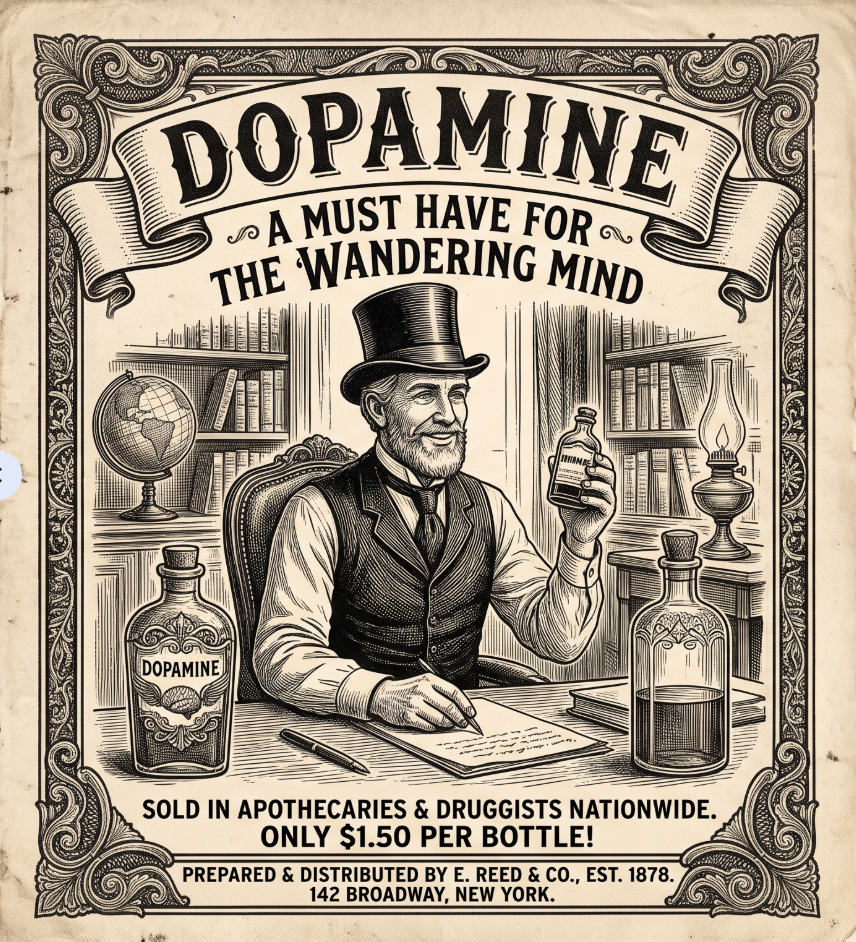
The 19th-Century Tonic vs. The 21st-Century Feed
We like to laugh at the Victorian era’s quick-fix elixirs, but the modern digital economy runs on the exact same premise: commodifying human neurochemistry.
Instead of a glass bottle on an apothecary shelf, today’s “dopamine” is packaged into:
Micro-targeted ads exploiting emotional vulnerability and burnout.
Algorithmic feedback loops designed to keep minds “wandering” rather than focused.
Aggressive retargeting tactics that prey on “Nervous Exhaustion” to sell instant remedies.
As digital marketers and privacy advocates in the mental health space, we see this paradox every day. The digital landscape treats human attention and neurochemistry like raw materials to be harvested, processed, and auctioned off to the highest bidder.
You Can’t Order Regulation from a Catalog
Here is the inconvenient truth that no Google Ad headline can sell you:
Dopamine is not a commodity. You cannot buy focus in a bottle, click your way into mental clarity, or let an algorithm regulate your nervous system for you.
True cognitive stability and focus don’t come from external hacks, endless notifications, or hyper-personalized web tracking. They come from internal regulation, healthy boundaries, and intentional environments.
Why Privacy is the Ultimate Shield for Mental Well-being
When platforms use invasive pixels, server-side tracking, and behavioral profiling to map your anxiety, fatigue, or stress levels, they aren’t helping you regulate your mental state—they are monetizing your dysregulation.
At Privacy First Digital, we believe mental health practices and digital platforms have a ethical duty:
Respect human agency: Stop using predatory dopamine loops to drive clicks.
Protect user data: Healthcare and mental well-being should never be traded on ad exchanges.
Build for true wellness: Respecting user privacy is the first step in creating a digital ecosystem that calms the nervous system instead of exploiting it.
You don’t need Dr. Elias Reed’s $1.50 Elixir, and you don’t need a platform tracking your every digital impulse. Reclaiming your attention starts with reclaiming your privacy.